What Is a Negative Prompt? How It Works and When to Use One

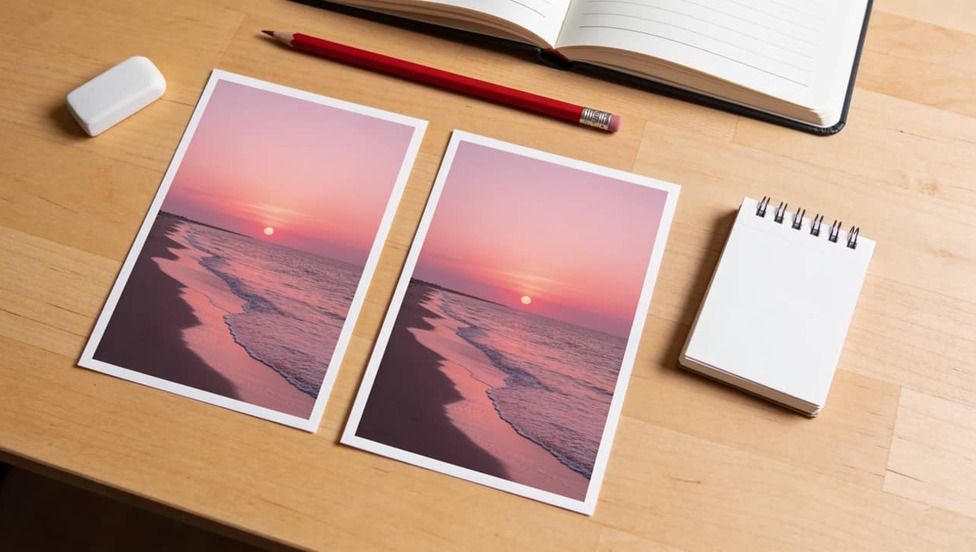
A negative prompt is a second piece of text that tells an AI image model what to leave out of a picture, such as "blurry, watermark, extra fingers." The main prompt says what you want, and the negative prompt names what you don't. It began as a setting in open diffusion models such as Stable Diffusion. Many newer models have no separate field for it, and you write the exclusions into the main prompt instead.
How a Negative Prompt Works
A diffusion model builds an image step by step from noise, and at each step your prompt pulls the picture toward what it describes. A negative prompt adds a push in the other direction. The Hugging Face diffusers documentation describes it as steering the model away from things you don't want, and notes that people often use it to improve overall image quality, for example by removing blur or distorted details.
That is why most negative prompts read like a list of defects rather than a sentence:
Quality problems: blurry, low resolution, noise, oversaturated
Anatomy problems: extra fingers, distorted face, missing limbs
Unwanted extras: text, watermark, logo, border, frame
Off-brief content: people, cars, clutter, a style you didn't ask for
Negative Prompt Field vs. "No" in the Main Prompt
Where the exclusion goes depends on the model you use:
Don't type "no" into a negative prompt field. The field already means "avoid this," so "no people" there can read as a double negative on some tools. Keep it to plain keywords.
Google's own guidance for its image models points to the third approach. The Gemini API image generation guide advises describing the scene you want in positive terms, so instead of "no cars" you would write "an empty, deserted street."
Our Test: Inline "No" vs. a Positive Description
On November 16, 2026, we ran three prompts on Seedream 4.5, a model that takes one prompt with no separate negative field, at 2K and 16:9. Each image cost 13 credits. The first two prompts asked for the same empty beach, once with a "no" list and once described positively. The third tested the classic trap of naming the thing you don't want.



Inline 'no' list
Positive description
'There is no elephant in the room'
What we saw: the inline "no" list worked. The first beach had no people, umbrellas, or boats, and even the living room prompt that mentioned an elephant returned a room without one. The difference was in control. The "no" prompt gave a tight shot of the shoreline with a flat sky, while the positive prompt returned the wide, open view we had pictured, with the sun on the horizon. Listing exclusions kept things out. Describing the scene decided what came in.
Three images on one model are not proof of how every model behaves. Older open models were known to latch on to the words in a "no" phrase, which is why the separate field exists, so test your own model before relying on either approach.
Test a negative prompt on Seedream 4.5 in DaVinci
Try Seedream 4.5When to Use a Negative Prompt
- Your model has a negative prompt field and keeps adding the same defect, such as blur, a watermark, or warped hands.
- You run many images from one template and want a fixed list of things to keep out of every result.
- The prompt is already long, and moving the exclusions to their own box keeps the main description readable.
- Your model has no field: add one short exclusion line at the end of the prompt, and keep it to a few items.
Keep the list short in every case. A long list of 30 defects copied from a forum dilutes the main prompt and can push the image toward a flat, overcorrected look.
How to Turn a "No" Into a Description
If an exclusion keeps failing, rewrite it as what you want to see in that spot:
Instead of "no people," write "an empty, quiet street at dawn."
Instead of "no clutter," write "a clean desk with only a laptop and a mug."
Instead of "no text," write "plain, unlabeled packaging."
Instead of "not blurry," write "sharp focus, fine detail."
Instead of "no harsh shadows," write "soft, even daylight from a large window."
You can compare both styles on several models in the AI image generator, and our AI image prompt examples show more ways to describe a scene.
Drafted with AI assistance and reviewed by Alişan Yazgı. Last updated: November 16, 2026.
More from DaVinci Blog