What AI Can Generate Images?: A Comprehensive Guide 2026
Imagine describing your vision in a few words and instantly seeing it transformed into a stunning image. In 2025, artificial intelligence is changing the creative landscape, making this possible for everyone. This comprehensive guide reveals what ai can generate images, diving into the smartest tools, the technology behind them, and the real-world impact. Discover how instant creativity is within reach, explore top platforms, and learn how to harness AI-driven imagery for personal and business success.
How AI Generates Images: Core Technologies Explained
Artificial intelligence has rapidly reshaped how we create and experience images. Today, understanding what ai can generate images involves exploring a blend of advanced algorithms, massive datasets, and accessible tools. This section dives into the core technologies powering this creative revolution, tracing their evolution, underlying mechanisms, data foundations, artistic flexibility, and the democratization of AI image generation.
The Evolution of AI Image Generation
The journey of what ai can generate images began with early neural networks, but the real breakthroughs arrived with Generative Adversarial Networks (GANs) around 2014. These models set the stage for DeepDream (2015), which transformed photos into surreal, dream-like visuals, captivating the world.
Progress accelerated with StyleGAN, enabling highly realistic human faces and customizable styles. The next leap came with diffusion models, introduced in 2021, which create images by gradually refining random noise into stunning, detailed visuals. Open-source initiatives like Stable Diffusion have empowered creators to build on these innovations, while big data and enhanced GPUs fueled model complexity and speed.
Milestone | Year | Impact |
|---|---|---|
GANs | 2014 | Adversarial image generation |
DeepDream | 2015 | Neural art, widespread public interest |
StyleGAN | 2018 | Realistic faces, style manipulation |
Diffusion Models | 2021+ | Superior realism, flexible outputs |
Core Algorithms and Architectures
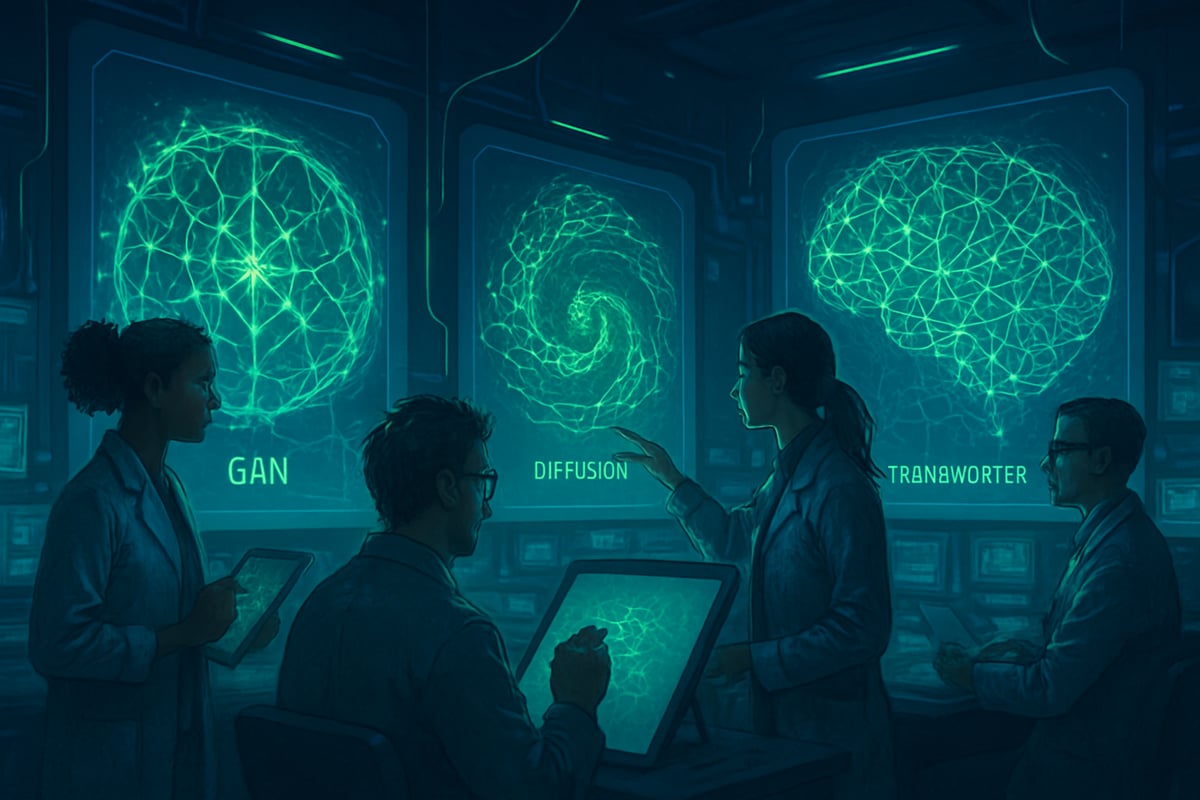
At the heart of what ai can generate images are three main types of models:
Generative Adversarial Networks (GANs): These pit two neural networks against each other, producing images that become more convincing with each iteration.
Diffusion Models: These start with random noise and use a step-by-step process to denoise and reveal highly realistic images.
Transformer-Based Models: Originally designed for language, transformers now enable multi-modal generation, merging text and image understanding for more flexible creative outputs.
Each architecture offers unique strengths. GANs excel at stylized content, diffusion models at photorealism, and transformers at integrating text prompts for precise results. This diversity underpins the wide range of outputs users experience today.
Data and Training: What Powers AI Creativity
What ai can generate images depends on the quality and scale of its training data. Leading AI models are trained on vast datasets such as LAION-5B and ImageNet, as well as proprietary image collections curated for diversity and accuracy.
Key considerations include:
Data Diversity: A broad dataset ensures the AI can generate art in many styles and subjects.
Quality Control: Removing low-quality or biased images improves results.
Ethical Sourcing: Responsible curation avoids copyrighted or inappropriate content.
AI creativity thrives on data variety, but ongoing debates around data ethics and copyright continue to shape how datasets are built and used.
Realism, Style, and Control
One of the most compelling aspects of what ai can generate images is the spectrum between photorealism and stylized art. Users can guide outputs through prompt engineering carefully crafting input text to achieve desired results.
Adjustable parameters give users control over:
Style: From oil painting to anime.
Mood: Bright, dark, whimsical, dramatic.
Aspect Ratio: Portrait, landscape, square.
Output Type | Example Use | Control Parameter |
|---|---|---|
Photorealistic | Product mockups | Precision prompts |
Stylized | Digital art, logos | Style selection |
The ability to fine-tune these elements ensures that creators achieve exactly the visuals they envision.
Accessibility and Democratization
Today, what ai can generate images is no longer limited to experts. No-code web platforms and mobile apps have broken down technical barriers, making these tools accessible to anyone with a creative spark.
Key trends include:
Intuitive interfaces: Drag-and-drop, simple prompts.
Mobile access: Create anywhere, anytime.
Widespread adoption: By 2025, over 60% of creative professionals use AI image tools, according to AI image generation statistics 2024.
This democratization means that artists, marketers, students, and hobbyists alike can harness AI to bring their visions to life, regardless of technical background.
Leading AI Image Generators in 2025: Platforms & Features
The landscape of what ai can generate images has evolved remarkably by 2025. The market is thriving, with projections estimating a value of $2.5 billion by year’s end. Over 100 major platforms now offer AI-powered image generation, each pushing the boundaries of creativity and accessibility. This growth is fueled by rapid advancements in underlying technology, increased demand across industries, and the democratization of powerful creative tools. As more professionals and hobbyists embrace these solutions, competition among platforms continues to drive innovation, improved usability, and diverse feature sets.
DaVinci AI: All-in-One Creative Platform
Among the leaders in what ai can generate images, DaVinci AI stands out as a comprehensive, all-in-one solution. Designed for creators, businesses, and hobbyists alike, DaVinci AI offers an extensive feature set: text-to-image, logo, tattoo, interior design, and signature generators. Users can choose from a wide array of artistic styles, explore a prompt library, and refine outputs with intuitive editing tools.
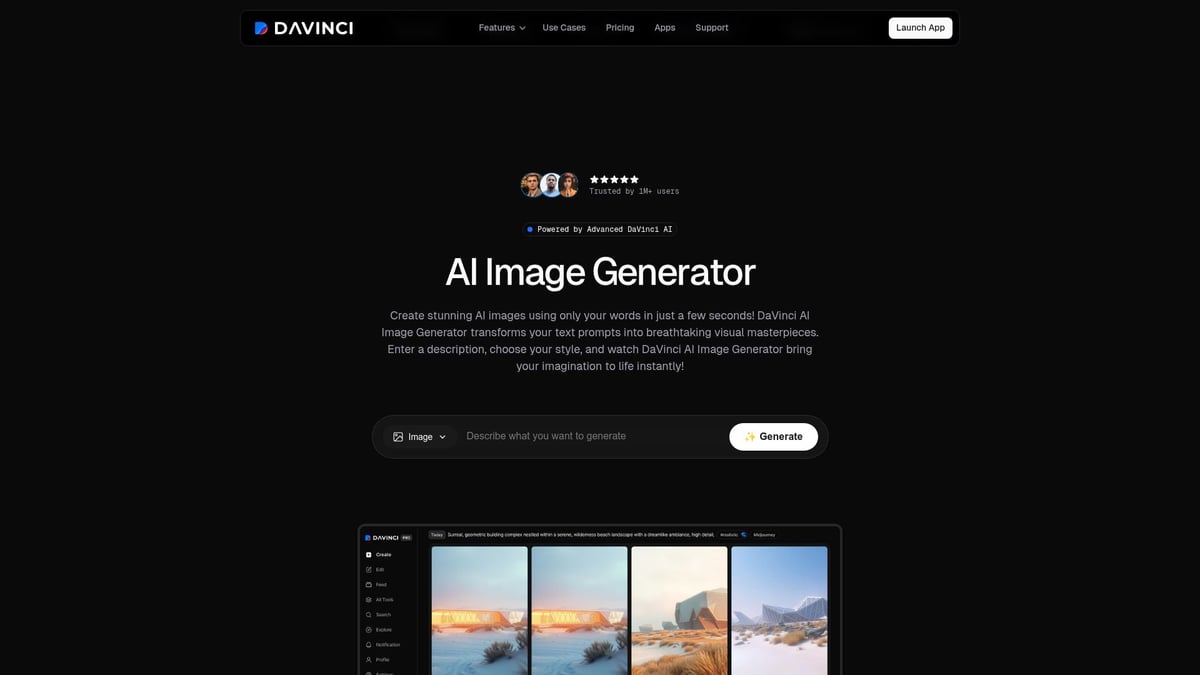
Mobile accessibility ensures creativity on the go, while commercial licensing options make it ideal for businesses. With over 1 million creators worldwide, DaVinci AI supports real-world applications such as marketing, branding, and social media content. For a closer look at its capabilities, visit the AI Image Generator Tool to see how it empowers users to bring their ideas to life.
Comparing Features and Pricing
When considering what ai can generate images, comparing features and pricing is essential. Most leading platforms offer both free and paid tiers, with subscription models unlocking advanced options. Output quality and speed vary by provider, as do customization tools for style, mood, and aspect ratio.
Below is a quick comparison of notable platforms:
Platform | Free Tier | Paid Plans | Customization | Commercial Use | Cross-Platform |
|---|---|---|---|---|---|
Midjourney | Limited | Yes | High | Yes | Web, Discord |
DALL·E 3 | Yes | Yes | Medium | Yes | Web, MS Apps |
Stable Diff. | Yes | Yes | Very High | Yes | Web, Apps |
Adobe Firefly | Yes | Yes | High | Yes | Web, CC Apps |
DaVinci AI | Yes | Yes | High | Yes | Web, Mobile |
Licensing terms also differ, especially for commercial projects. Assess your needs carefully to select the best fit for your workflow and budget.
User Experience and Community
User experience is a critical differentiator in what ai can generate images. Intuitive interfaces, guided prompt suggestions, and responsive feedback loops make these tools accessible even to beginners. Community galleries and prompt-sharing hubs provide inspiration and foster collaboration.
Many platforms highlight success stories, showing how creators monetize AI-generated art or build portfolios for clients. Case studies reveal that artists and entrepreneurs leverage these communities not just for feedback but for networking and professional growth. Ultimately, the vibrant user base and active support systems are as valuable as the technology itself, ensuring users maximize the potential of AI-powered creativity.
Practical Applications: How AI-Generated Images Are Used
AI image generation is transforming creative workflows, business strategies, and personal expression. By exploring what ai can generate images for, professionals and hobbyists alike discover entirely new ways to solve problems and communicate visually. The use cases below illustrate just how broad and impactful this technology has become.
Creative Industries and Digital Art
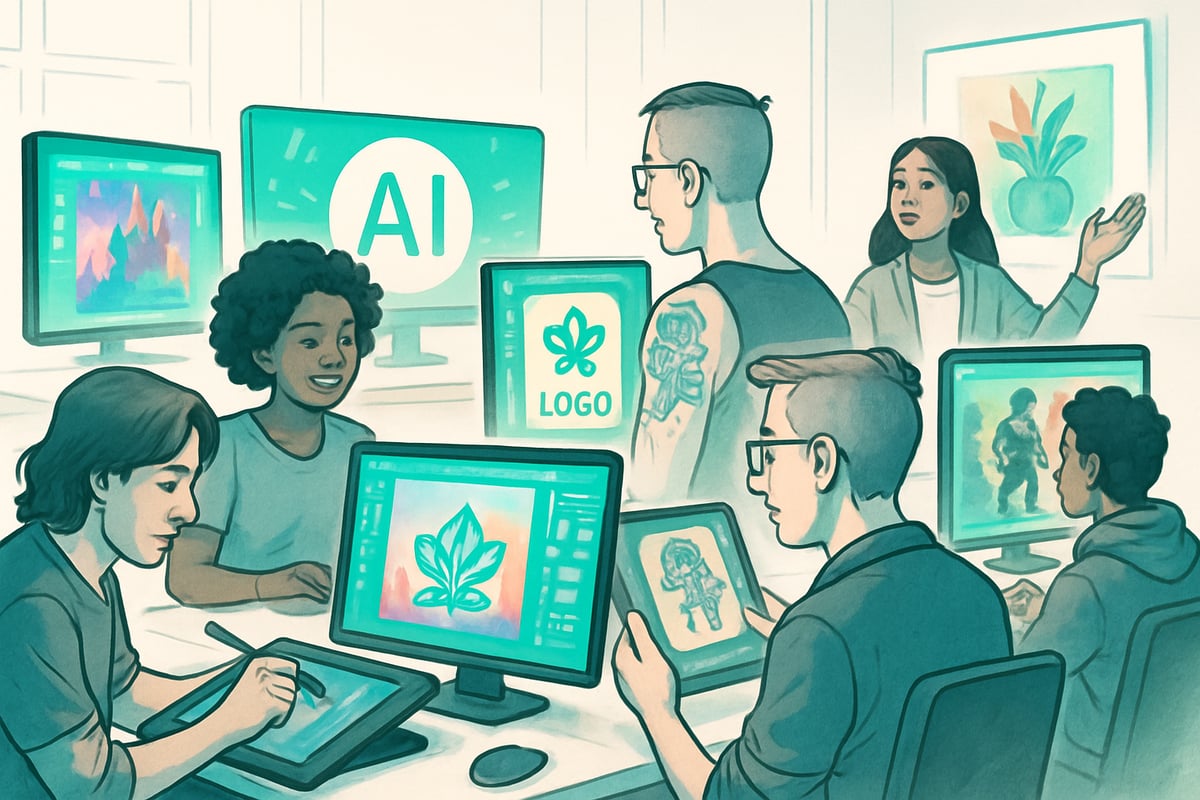
When it comes to creative fields, what ai can generate images has redefined artistic boundaries. Artists now use AI as a co-creator, blending traditional skills with advanced algorithms to produce generative art and digital masterpieces. This collaboration enables rapid prototyping and the exploration of entirely new visual styles.
Generative art exhibitions feature AI-assisted works.
NFT projects often rely on AI to create unique, collectible visuals.
Digital galleries showcase AI-driven creativity alongside human artists.
AI tools empower both established artists and newcomers to experiment, iterate, and share their work globally.
Business and Marketing
Businesses are rapidly adopting what ai can generate images for branding, advertising, and content creation. Marketers and designers leverage AI to prototype logos, product visuals, and campaign graphics in minutes. For example, the AI Logo Creation Platform demonstrates how companies can instantly generate unique, professional logos tailored to their brand identity.
Streamlined branding processes with AI-generated assets
Social media managers producing fresh, on-brand visuals
Enhanced presentations and product mockups for clients
AI-driven imagery accelerates project timelines and fuels innovation across industries.
Personal Projects and Everyday Use
Everyday users are discovering what ai can generate images for in personal projects and hobbies. From custom tattoo designs to interior décor ideas, AI puts creative power in the hands of non-artists. Students and educators use AI to illustrate projects, while families design personalized gifts and cards.
Tattoo enthusiasts preview custom ink before visiting a studio
Homeowners visualize new décor styles or furniture arrangements
Students create engaging visual stories for class assignments
The accessibility of AI image generation tools makes creativity part of daily life.
Media, Entertainment, and Gaming
In entertainment, what ai can generate images has become a game-changer for pre-production and design. Studios and independent creators use AI for concept art, storyboarding, and rapid ideation. Game developers design characters and environments with unprecedented speed and variety.
Film and TV teams visualize scenes and costumes before filming
Game artists generate unique, diverse character concepts
Writers use AI images for storyboards and pitch decks
AI streamlines creative pipelines, allowing for more experimentation and richer storytelling.
Accessibility and Inclusivity
A critical advantage of what ai can generate images is its role in democratizing creativity. Accessible interfaces and voice-to-image tools empower people of all backgrounds and abilities to create professional visuals. This inclusivity ensures that creativity knows no barriers.
No-code platforms for non-artists and beginners
Tools designed for people with visual or motor impairments
Diverse datasets promoting broader representation in generated content
AI image tools foster a more inclusive creative community, opening doors for everyone to participate and express themselves.
Step-by-Step Guide: Creating Images with AI in 2025
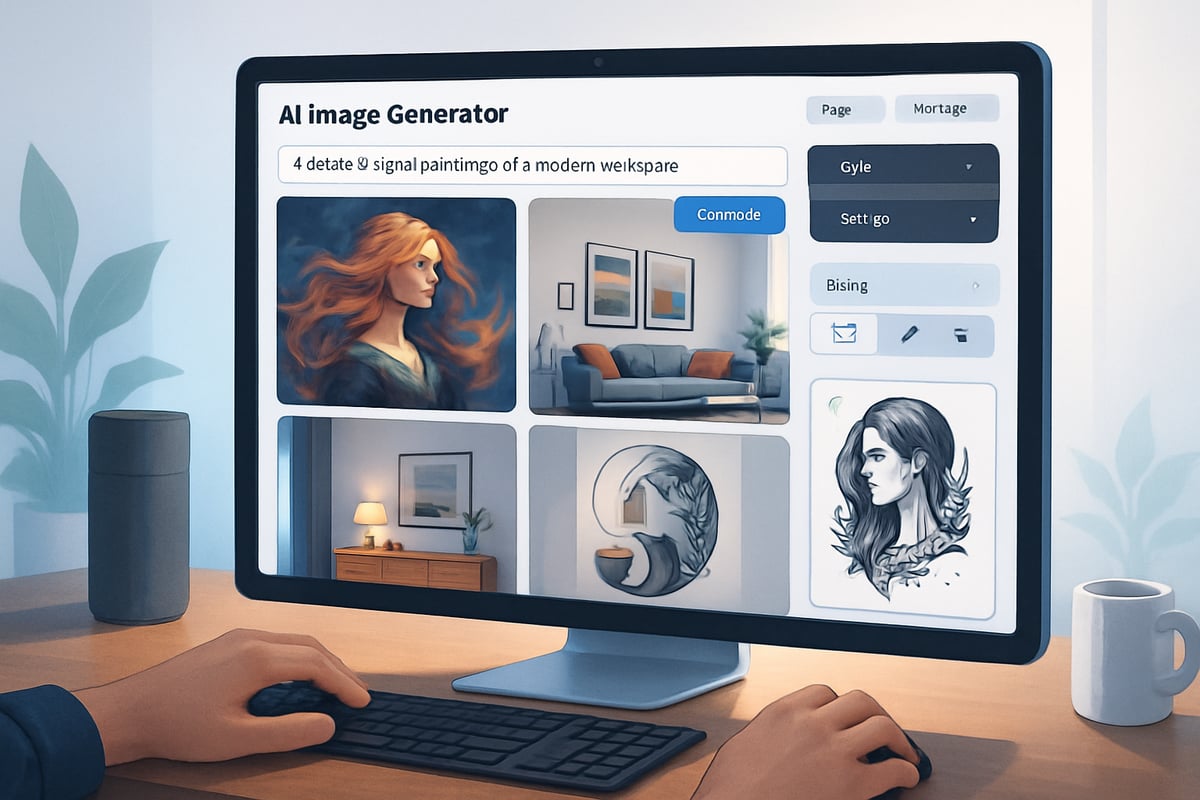
Unlocking the potential of what ai can generate images has never been more accessible. Whether you’re a professional designer or a hobbyist, the right approach can take your creative projects to new heights. Follow this step-by-step guide to master the process in 2025.
Step 1: Choosing the Right AI Image Generator
Selecting the best tool for what ai can generate images starts with understanding your project’s needs. Are you seeking photorealistic images, artistic styles, or specific domains like logos or interior design?
Consider these factors:
Intended use: Commercial, personal, or educational.
Style preferences: Realistic, abstract, cartoon, or mixed media.
Budget: Free tiers, pay-per-use, or subscriptions.
Licensing: Rights for commercial use or public sharing.
A quick comparison table can help:
Platform | Strengths | Pricing | Licensing |
|---|---|---|---|
Midjourney | Artistic, community | Subscription | Personal/Commercial |
DALL·E 3 | Natural language, integrated | Tiered | Commercial |
Stable Diffusion | Open-source, customizable | Free/Paid | Flexible |
DaVinci AI | All-in-one, mobile | Free/Paid | Commercial |
With so many choices, align your selection with the results you expect from what ai can generate images.
Step 2: Crafting Effective Prompts
The core of what ai can generate images lies in how you communicate with the AI. Prompt engineering is the art of describing exactly what you want.
Tips for crafting powerful prompts:
Be specific: “A cozy Scandinavian living room, soft lighting, minimalist décor.”
Add style cues: “In watercolor style” or “as a digital painting.”
Use reference images: Some platforms let you upload or link examples.
Notice how changing the prompt alters results:
“A futuristic city at night” vs. “A futuristic city at night, neon lights, rainy streets, cinematic style.”
Explore prompt libraries and inspiration hubs to discover what ai can generate images for your unique vision.
Step 3: Customizing and Refining Outputs
Once the AI delivers an image, the next step is refining. Most platforms offer editing tools for cropping, upscaling, and adjusting styles. Iterative improvement is key: tweak your prompt and regenerate until satisfied.
Generate multiple variants to compare options. Use editing features to adjust color, composition, or details. For specific creative applications, like designing custom tattoos, try an AI Tattoo Generator to see what ai can generate images tailored to personal or client preferences.
Remember, experimentation is vital. Iterating helps you uncover the full potential of what ai can generate images.
Step 4: Downloading and Using AI-Generated Images
After perfecting your creation, you’ll need to export it. Platforms support various formats JPG, PNG, SVG and resolutions to fit different needs.
Integrate your images into workflows for design, presentations, or digital portfolios. Always review licensing terms, especially for commercial use. Understanding copyright and usage rights is essential when leveraging what ai can generate images for business or public projects.
Exporting high-resolution files ensures your work remains sharp and professional across all mediums.
Step 5: Sharing and Collaborating
The final step in maximizing what ai can generate images is sharing your creations. Many platforms offer community galleries, feedback loops, and collaboration features.
Share: Post your work for inspiration and recognition.
Collaborate: Invite team members to co-create or iterate.
Portfolio: Build a public showcase to attract clients or collaborators.
Engaging with communities not only improves your skills but also expands the possibilities of what ai can generate images in 2025.
Ethical, Legal, and Societal Considerations of AI Image Generation
Understanding what ai can generate images means grappling with a rapidly shifting ethical, legal, and cultural landscape. As AI-generated visuals become more sophisticated, these considerations are crucial for creators, businesses, and anyone using these technologies.
Copyright and Ownership
When considering what ai can generate images, the question of who owns the resulting artwork is front and center. Laws vary by region, but current legal frameworks often do not recognize AI as an author. In the US and EU, copyright is typically granted only to works created by humans, leaving AI-generated images in a legal gray area.
Commercial usage rights and attribution requirements depend on the platform and the dataset used to train the models. Some providers offer commercial licenses, while others restrict usage or require attribution. Legal disputes have arisen over the use of copyrighted materials in training datasets, further complicating ownership.
Creators and businesses must review platform terms and stay updated as legal precedents evolve. This ensures that what ai can generate images is used responsibly and within the law.
Bias, Representation, and Data Ethics
Bias and ethical data sourcing are critical issues in what ai can generate images. AI models are only as fair as the data they train on. If datasets lack diversity or contain biased content, the resulting images may reinforce stereotypes or exclude underrepresented groups.
Ethical dataset curation is essential to promote inclusivity. Platforms are increasingly transparent about their data sources and allow users to report problematic outputs. By demanding diverse, well-curated datasets, users can influence how what ai can generate images reflects the world more accurately.
Understanding these dynamics empowers creators to produce visuals that are representative and ethical, rather than perpetuating harmful biases.
Deepfakes, Misinformation, and Misuse
The ability of what ai can generate images to create highly realistic visuals comes with risks. Deepfakes and manipulated media can spread misinformation, challenging the line between creativity and deception. Safeguards, such as watermarking and detection tools, are being developed to protect authenticity.
According to AI image generation market growth, the rise of deepfakes has prompted regulatory action and increased public awareness. Platforms are implementing stricter policies to combat misuse, but vigilance remains essential.
Understanding the difference between creative AI art and malicious manipulation is vital for maintaining trust in visual media.
Societal Impact and the Future of Creativity
As what ai can generate images becomes ubiquitous, the societal impact is profound. Roles for artists and designers are evolving, with AI serving as both a tool and a collaborator. New opportunities for creative expression are emerging, but concerns about job displacement and authenticity persist.
Future trends suggest even broader adoption of AI image generation, with AI image generation future trends projecting continued market growth. This evolution challenges traditional notions of creativity while democratizing access to powerful visual tools.
Navigating these changes thoughtfully ensures that AI-driven imagery benefits society, fosters innovation, and respects creative integrity.
Expert Tips and Best Practices for Maximizing AI Image Generation
Unlocking the full potential of what ai can generate images requires more than just entering a prompt. By applying expert strategies and best practices, you can achieve outstanding results whether your goal is creative expression, professional design, or personal projects.
Mastering Prompt Engineering
Effective prompt engineering is at the heart of what ai can generate images. Start by being clear and specific with your descriptions. Add style cues, such as "minimalist" or "vivid colors," to guide the AI. Use reference images or inspiration from platforms like Interior Design with AI to see how prompt changes affect results.
Consider this approach:
State the subject and desired style.
Specify colors, mood, or lighting.
Use analogies or famous artistic references.
Test variations and compare outputs.
Refining your prompts leads to more consistent, high-quality images tailored to your vision.
Fine-Tuning and Post-Processing
After generating visuals, fine-tune for perfection. Most platforms offer built-in editing tools for cropping, upscaling, and adjusting details. Integrate the output into traditional design software for advanced tweaks or combine multiple AI images for unique effects.
When considering what ai can generate images, remember that post-processing can elevate your work from good to exceptional. Upscaling enhances resolution for print or web, while manual touch-ups bring out subtle features. Experiment with layers, filters, and blending modes to achieve your desired outcome.
Staying Updated with AI Advancements
AI image generation evolves rapidly. Stay informed about the latest updates, new features, and model releases by joining official communities, following platform blogs, and participating in online forums. Many creators share prompt ideas, tutorials, and showcase their work, providing inspiration and practical tips.
Being aware of advancements in what ai can generate images helps you leverage cutting-edge tools and maintain a competitive edge. Enter AI art competitions or attend webinars to connect with experts and discover emerging trends that can inform your creative practice.
Building a Responsible Creative Practice
Responsible use is crucial as AI reshapes visual creation. Understand copyright laws and always review licensing terms before commercializing AI-generated content. Give credit to platforms or datasets when appropriate and be transparent about your use of AI in your workflow.
Inclusivity and ethical sourcing matter in what ai can generate images. Choose platforms that prioritize diverse data and promote positive representation. Encourage openness and collaboration in your community, ensuring that AI-driven creativity remains accessible and respectful to all.